
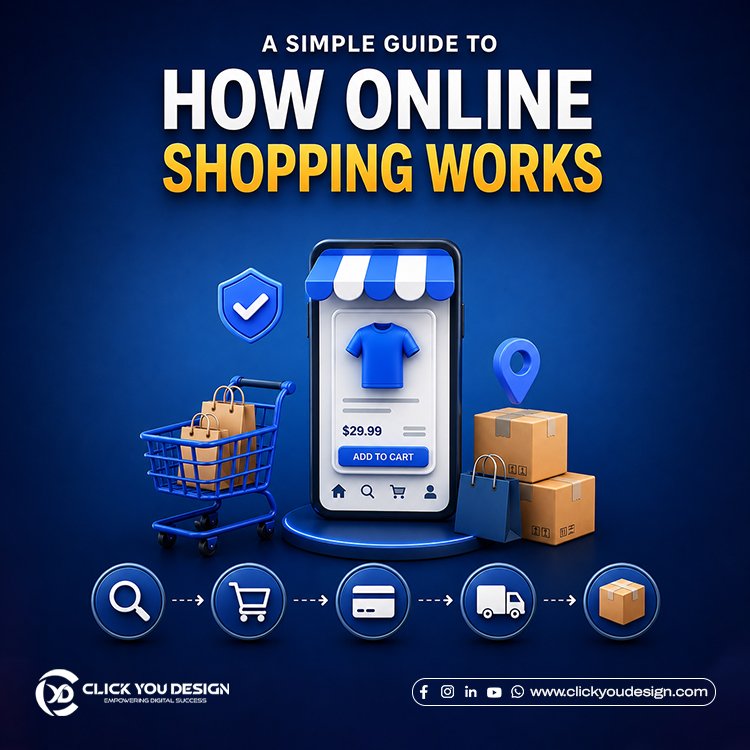
E-commerce has changed the way people shop and businesses sell. Instead of visiting physical stores for every purchase, customers can now browse products, compare prices, and place orders using a smartphone or computer. As a result, online shopping has become a convenient part of everyday life for millions of people.
E-commerce refers to the process of selling products or services through websites and mobile apps. Unlike traditional shopping, online stores allow customers to shop whenever and wherever they want. Today, many businesses combine online and offline sales to reach more customers and create a convenient shopping experience.
At Click You Design, we provide comprehensive website design and digital marketing services to help businesses build a strong online presence and reach their target customers.
How Online Transactions Work
Understanding how online shopping works helps customers make informed decisions and allows business owners to understand the complete buying journey.
1. Businesses List Their Products
First, businesses add their products or services to a website. They provide important information that helps customers understand what they offer.
A typical product listing includes:
Product images
Detailed descriptions
Pricing
Available sizes or variations
Customer reviews
Clear and accurate product information helps customers compare their options and make confident purchasing decisions.
2. Customers Discover Products
Once businesses publish their products, they need to attract potential customers. Digital marketing plays an important role at this stage.
Businesses can reach their target audience through:
Search engines
Social media platforms
Paid advertisements
Email marketing
Content marketing
These channels help businesses connect with people who are actively looking for specific products or services. Therefore, a strong digital marketing strategy can increase website traffic and create more opportunities for sales.
3. Customers Browse and Compare
After customers visit an online store, they can explore different categories, compare products, read descriptions, and check reviews.
A clean website layout also makes a significant difference. Simple navigation, clear product information, and an easy-to-use interface encourage visitors to explore more products and move closer to making a purchase.
4. Customers Add Products to the Shopping Cart
When customers find a product they like, they can add it to their virtual shopping cart. They can then continue browsing or proceed directly to checkout.
The shopping cart gives customers an opportunity to review their selected products, check quantities, and see the total cost before placing the order.
5. Customers Complete Secure Payments
Next, customers move to the checkout page. Here, they provide their delivery details and select a preferred payment method.
Common payment options include:
Credit cards
Debit cards
Digital wallets
Online banking
Buy Now, Pay Later services
Secure payment gateways protect sensitive customer information during transactions. In addition, a reliable checkout process builds trust and reduces the chances of customers abandoning their carts.
6. Businesses Process and Deliver Orders
After the customer completes the payment, the business receives the order and begins processing it.
For physical products, the business prepares, packs, and ships the order to the customer’s delivery address.
Digital products follow a different process. For example, customers purchasing software, eBooks, or online courses may receive a download link or account access through email shortly after completing the payment.
7. Businesses Continue Supporting Customers
The customer journey does not end when the order reaches its destination. Instead, businesses should continue supporting customers after the purchase.
They can encourage customers to:
Leave product reviews
Rate their shopping experience
Contact customer support when needed
Request returns or exchanges where applicable
A positive post-purchase experience can improve customer satisfaction and encourage repeat purchases. Therefore, businesses should treat customer support as an important part of the overall buying journey.
Benefits of Selling Online
Selling online provides several advantages for businesses of different sizes. With the right strategy, companies can reach new customers, improve convenience, and create additional sales opportunities.
1. Reach Customers Beyond Your Local Area
An online store allows a local business to reach customers across different cities, states, and even countries. As a result, businesses can expand their market without opening physical stores in every location.
2. Allow Customers to Shop Anytime
Unlike traditional stores with fixed operating hours, online stores can remain accessible throughout the day. Customers can browse products and place orders whenever it suits them.
This flexibility creates a more convenient shopping experience and allows businesses to accept orders outside normal working hours.
3. Reduce Certain Operating Costs
Online businesses can often reduce some of the expenses associated with physical retail locations. For example, businesses may spend less on rent, utilities, and in-store staffing.
However, businesses still need to invest in areas such as website development, digital marketing, technology, inventory, and logistics.
4. Create New Market Opportunities
As more people use smartphones and digital platforms for shopping, businesses can explore new opportunities through e-commerce.
A well-designed online store combined with effective marketing can help businesses reach new audiences and increase their sales potential.
Understand Customer Behaviour
E-commerce can provide valuable insights into customer preferences and purchasing behaviour.
Businesses can use these insights to:
Recommend relevant products
Improve marketing campaigns
Personalize customer experiences
Understand popular products
Improve customer satisfaction
As a result, businesses can make more informed decisions and create strategies based on actual customer behaviour.
Common Challenges Businesses Face
Although selling online offers many opportunities, businesses also need to manage several challenges. Understanding these challenges can help companies prepare better strategies for long-term growth.
1. Strong Competition
The online marketplace includes thousands of businesses offering similar products and services. Therefore, companies need to differentiate themselves through strong branding, quality products, excellent customer service, and effective marketing.
A professional website and consistent digital presence can also help businesses build credibility and stand out from competitors.
2. Shipping and Logistics
Businesses must manage inventory, packaging, shipping, and delivery efficiently. As order volumes increase, these processes can become more complex.
For this reason, companies should establish reliable logistics systems and communicate delivery timelines clearly to customers.
3. Increasing Customer Expectations
Online shoppers expect convenient and reliable service. They often look for:
Fast delivery
Easy return policies
Quick responses
Reliable customer support
Secure payment options
Businesses that consistently meet these expectations can build stronger customer relationships and encourage repeat purchases.
4. Limited Face-to-Face Interaction
Online businesses cannot rely on face-to-face conversations to build customer relationships. Instead, they need to create trust through clear communication, helpful content, professional website design, transparent policies, and responsive customer support.
5. Protecting Customer Information
Security remains an important responsibility for every online business. Companies must protect customer information and payment details by using secure technologies and following strong cybersecurity practices.
A secure online shopping experience not only protects customers but also helps businesses maintain their reputation and credibility.
Final Thoughts
E-commerce has transformed the way people buy and sell products. It offers customers greater convenience while giving businesses opportunities to reach wider audiences and expand their operations.
However, success requires more than simply launching an online store. Businesses need a user-friendly website, effective digital marketing, secure payment systems, reliable delivery, and strong customer support. By focusing on each stage of the customer journey, companies can create better shopping experiences and build long-term relationships.
Looking to build a professional E-commerce webiste or strengthen your digital presence? Click You Design helps businesses create user-friendly websites, improve their online visibility through SEO, and develop result-driven digital marketing strategies. Contact our team today and take the next step towards growing your business online.