
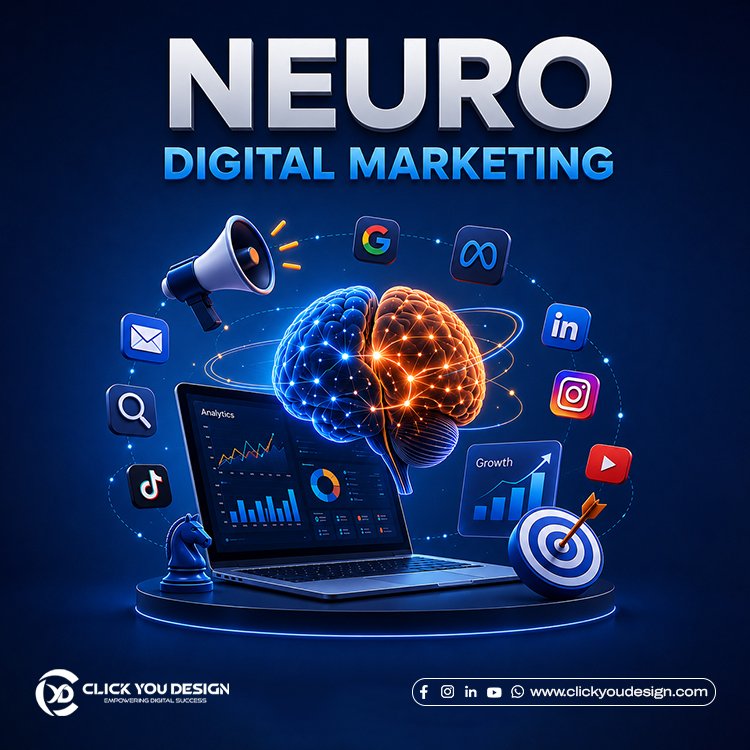
What is neurodigital marketing?
Every day, people make countless buying decisions. Some are carefully planned, while others happen in just a few seconds. But have you ever wondered why someone chooses one brand over another, even when the products are almost identical?
The answer often lies in neuromarketing. Behavioural marketing combines marketing with neuroscience to understand how the human brain responds to advertisements, products, websites, packaging, and brand experiences. Instead of relying only on surveys or customer opinions, neuromarketing studies real human behaviour and emotional reactions. As a result, businesses gain deeper insights into what truly influences customer decisions.
Today, brands across industries use this science to create better experiences, stronger connections, and more effective marketing campaigns.
Why Consumer Psychology Marketing Matters
Traditional marketing tells you what customers say they like. However, consumer psychology marketing helps you understand what customers actually respond to.
Many buying decisions happen subconsciously. In fact, emotions often influence purchases before logic does. Therefore, businesses that understand customer psychology can create marketing that feels more relevant, engaging, and trustworthy.
Instead of guessing what works, companies can make informed decisions based on how people naturally think and behave.
How Neuro-Psychology Marketing Works
Neuropsychology marketing focuses on how the brain processes information during a buying journey. It looks at factors such as the following:
- Attention
- Emotion
- Memory
- Trust
- Decision-making
- Visual perception
By understanding these responses, marketers can design campaigns that attract attention, build confidence, and encourage action.
Key Principles of Human-Centred Marketing
1. First Impressions Matter
People form opinions within seconds. A clean website, attractive design, and clear messaging immediately create trust.
This is why strong headlines, professional visuals, and simple layouts often perform better than cluttered designs.
2. Emotions Drive Decisions
People remember how a brand makes them feel.
Whether it’s happiness, excitement, confidence, or inspiration, emotional marketing creates stronger relationships than simply listing product features.
Storytelling is one of the most effective ways to build these emotional connections.
3. Simplicity Wins
When people see too much information, they often become confused or overwhelmed.
Simple designs, short messages, and clear calls to action reduce mental effort and make decisions easier.
The easier it is to understand your message, the more likely customers are to respond.
4. Colors Influence Perception
Colours communicate feelings before people even read the content.
For example:
- Blue often represents trust and reliability.
- Green suggests health and growth.
- Red creates urgency and excitement.
- Black reflects luxury and sophistication.
Choosing the right colour helps reinforce your brand identity.
5. Social Proof Builds Trust
People naturally look to others before making decisions.
Customer reviews, testimonials, ratings, case studies, and success stories increase credibility and reduce uncertainty.
When potential customers see positive experiences from others, they feel more confident about choosing your business.
6. Scarcity Creates Urgency
Limited-time offers or limited availability encourage faster decisions.
However, businesses should always use genuine scarcity rather than artificial pressure. Authentic marketing builds long-term trust.
Where Neurodigital Marketing Is Used
Neuromarketing plays an important role across many industries.
Businesses use it for:
- Website design
- Social media campaigns
- Digital advertising
- Product packaging
- Branding
- Email marketing
- Landing pages
- E-commerce stores
- Mobile applications
- Video marketing
Whether someone visits your website or watches your advertisement, behavioural marketing
helps create experiences that feel natural and engaging.
Benefits of Behavioural Marketing
Businesses that apply neuromarketing principles can enjoy several advantages:
- Better customer engagement
- Improved user experience
- Higher conversion rates
- Stronger brand recall
- More effective advertising
- Increased customer trust
- Better return on marketing investment
Instead of focusing only on selling products, businesses create meaningful experiences that customers remember.
How Neuromarketing Influences Digital Marketing
Digital marketing becomes far more effective when combined with neuromarketing.
For example, marketers can:
- Write headlines that immediately capture attention.
- Design websites that are easy to navigate.
- Place call-to-action buttons where users naturally look.
- Use images that create emotional connections.
- Simplify landing pages for faster decision-making.
- Create content that customers actually enjoy reading.
These small improvements often lead to better engagement and higher conversions.
Final Thoughts
Neurodigital marketing is not about manipulating customers. Instead, it is about understanding how people think, feel, and make decisions.
When businesses apply these insights responsibly, they create marketing that is more relevant, more engaging, and more valuable for customers.
Rather than overwhelming people with information, neuromarketing focuses on delivering the right message at the right moment in the simplest way possible.
That is what makes modern marketing truly effective.
If you want your brand to capture attention, build trust, and convert more customers, it’s time to move beyond guesswork.
Understand your audience, influence decisions, and create smarter digital marketing strategies with Click You Design. contact us today
.