
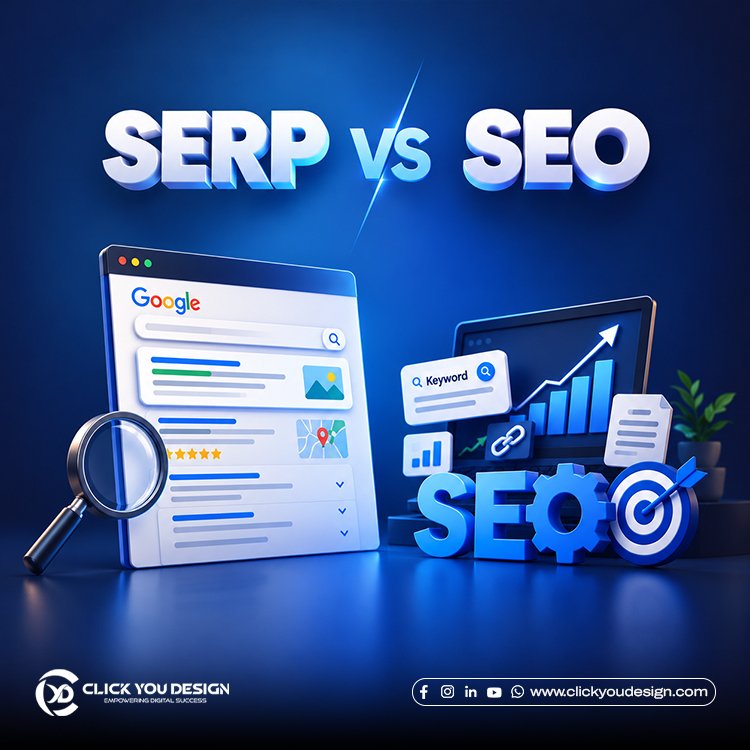
SERP vs SEO: People often confuse these two terms and how they function. However, each serves a different purpose, and both play significant roles in business growth. A SERP displays the results of a user’s search query, while SEO helps businesses improve their visibility in organic search results. Therefore, understanding the difference between these two terms helps business owners make better digital marketing decisions. In this blog, let’s explore the key differences between SERP vs SEO and understand how they contribute to your business’s online visibility.
What Is a SERP?
SERP stands for Search Engine Results Page. This page shows the results of a user’s search and presents pages that match the keywords they use. Moreover, SERPs help improve your business’s visibility through various elements, which are listed below. They also help you identify the top-ranking pages for specific keywords.
A SERP may contain several elements:
- Organic search results: Unpaid website listings that appear based on search relevance and ranking systems.
- Paid advertisements: Sponsored listings that businesses create through advertising platforms such as Google Ads.
- Featured snippets: Highlighted answers that provide information directly on the results page.
- Local business listings: Business profiles and map results relevant to location-based searches.
- People Also Ask: Related questions that help users explore a topic further.
- AI Overviews: AI-generated summaries that may appear for certain searches.
Each element gives businesses a different opportunity to reach potential customers. Therefore, analysing search results helps marketers understand what users see and identify opportunities to improve their visibility.
What Is SEO?
Search Engine Optimisation (SEO) is the process of improving a website so search engines can understand its content and users can discover relevant pages through organic search.
Unlike paid advertising, SEO focuses on earning visibility in unpaid search results. It involves several activities that improve a website’s content, technical performance, and overall usefulness.
The main components of SEO include:
- On-page SEO: Optimising page titles, headings, content, internal links, and images.
- Technical SEO: Improving crawlability, indexability, mobile usability, and website performance.
- Off-page SEO: Building credibility through relevant backlinks and other external signals.
- Content optimisation: Publishing useful, relevant content that answers users’ questions.
- Keyword research: Identifying the search terms that potential customers use to find products, services, and information.
For example, a digital marketing agency can optimise its service pages for relevant local keywords, publish informative blogs, and improve its website structure. These activities can help search engines understand the website and improve its chances of appearing for relevant searches.
Businesses can also refer to Google’s official SEO Starter Guide to learn more about recommended SEO practices.
What Is the Difference Between SERP and SEO?
Although SERP vs SEO relate to search engines, they describe two different things. A SERP refers to the search results page, while SEO refers to the process of improving a website’s organic visibility.
A SERP shows users the available results for their queries. SEO, on the other hand, helps businesses optimise their websites to improve their chances of appearing in relevant organic results.
For instance, when someone searches for a service, a SERP may display a business’s website, a competitor’s page, and sponsored advertisements. An effective SEO strategy helps the business improve its website content, technical health, and relevance to compete for organic visibility.
However, SEO cannot guarantee a specific ranking because search engines control their ranking systems.
How Do SERP and SEO Work Together?
SERP and SEO work together to support a business’s search visibility. SEO helps a website become more relevant and accessible to search engines, while SERP analysis shows how that website competes with other results.
Marketers can use this relationship to improve their strategies in several ways.
1. Identify keyword opportunities.
First, research the terms that your target audience searches for. Then, analyse the results to understand which pages rank and what information they provide.
2. Understand search intent.
Next, examine whether users expect an informational article, a service page, a product listing, or a local business result. Create content that matches that intent.
3. Improve page titles and descriptions.
Write clear, relevant title tags and meta descriptions that accurately represent each page. These elements can help users understand a result and decide whether to click it.
4. Create helpful content
Publish original content that answers users’ questions. Organise it with descriptive headings, clear explanations, and relevant links.
5. Monitor performance
Finally, use Google Search Console to review impressions, clicks, click-through rates, and average search positions. These insights can help you identify pages that need improvement.
Consistent analysis allows marketers to refine their approach and respond to changes in search behaviour.
How Can Click Your Design Help Improve Your Search Visibility?
Click You Design helps businesses strengthen their digital presence through SEO and other digital marketing services. A clear understanding of search results allows businesses to identify opportunities, while a well-planned SEO strategy helps them work toward stronger organic visibility.
Our approach can include keyword research, competitor analysis, on-page optimisation, technical SEO, content marketing, and performance monitoring. By aligning these activities with your business goals, you can build a more effective strategy for reaching your target audience.
Whether you want to improve local visibility, attract relevant website visitors, or strengthen your service pages, a structured digital marketing strategy can help you move in the right direction.
Conclusion
Understanding SERP vs SEO helps businesses see the connection between search engine optimisation and the results users encounter online. A SERP displays the available results, while SEO focuses on improving a website’s ability to appear in relevant organic searches.
Businesses can use SERP analysis to identify opportunities, understand search intent, and evaluate competitors. At the same time, effective SEO practices help them create useful content, improve website performance, and attract relevant visitors. Although search rankings can change, a consistent, user-focused strategy supports long-term digital growth.
Ready to improve your website’s search visibility? Contact Click You Design to discuss your SEO goals and discover how a tailored digital marketing strategy can help your business reach the right audience and generate more opportunities.