
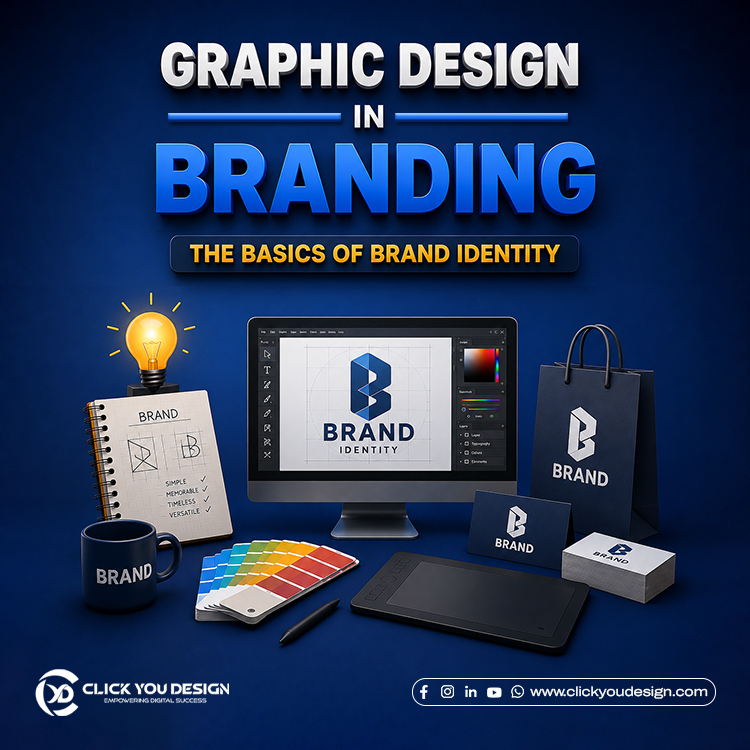
Graphic design in branding plays a vital role in building a successful business. When people see a brand, they often notice its logo, colors, and typography first. As a result, these visual elements help customers recognize and remember the brand. Therefore, businesses need professional graphic design to create a strong and unique identity.
At Click You Design, we help businesses create impactful visual identities that support brand growth. In this blog, we will explore the basics of brand identity and the importance of graphic design in branding.
Relationship Between Branding and Graphic Design
Every business needs a unique identity so that people can easily recognize and remember it. This identity includes logos, typography, colors, and other visual elements that represent the brand. For example, when we think of popular brands such as Starbucks, KFC, or Domino’s, their distinctive logos, color schemes, and visual styles immediately come to mind.
Therefore, graphic design serves as the foundation of branding. It transforms a company’s values, mission, and personality into visual elements that communicate with customers. Moreover, effective graphic design helps businesses stand out in a competitive market and creates a lasting impression on their audience.
What Is Branding?
Branding is the process of creating a unique identity for a product, service, or business in the minds of consumers. Through effective communication, consistent messaging, and strategic visual elements, businesses can showcase their values and build strong recognition among their target audience.
Furthermore, branding helps customers connect emotionally with a business and remember its name. As a result, a strong brand identity increases trust, strengthens customer relationships, and supports long-term business growth.
Key Elements of Branding
Successful branding involves several important components:
1. Understanding the Target Audience
Businesses must conduct detailed research to understand their target audience’s needs, preferences, and behaviors. This research helps create branding that resonates with potential customers.
2. Competitor Analysis
Extensive competitor research allows businesses to identify market opportunities and differentiate themselves from competitors. Consequently, brands can position themselves more effectively in the marketplace.
3. Defining Unique Selling Propositions (USPs)
Every successful brand has a unique value that sets it apart. Therefore, businesses must clearly define their unique selling propositions and communicate them consistently through their branding.
4. Creating a Brand Style Guide
A brand style guide ensures consistency across all marketing channels. Typically, it includes:
- Logo usage guidelines
- Brand color palettes
- Typography standards
- Visual design elements
- Marketing material guidelines
- Brand voice and messaging standards
As a result, businesses can maintain a professional and recognizable image across all customer touchpoints.
Why Graphic Design Matters in Branding
Graphic design brings a brand’s identity to life. Through strategic use of colors, typography, imagery, and layouts, designers create visual experiences that influence how customers perceive a business.
For instance, healthcare brands often use calming colors such as green and blue to convey trust and reliability. Meanwhile, food and fashion brands frequently choose vibrant colors to attract attention and create excitement. Similarly, luxury and jewelry brands rely on elegant typography and sophisticated visual elements to communicate exclusivity and premium quality.
Therefore, graphic designers must understand both business psychology and industry-specific requirements to create branding that effectively connects with the intended audience.
Branding Is an Ongoing Process
Many businesses mistakenly believe branding is a one-time activity. However, successful branding is an ongoing process that evolves with market trends, customer expectations, and business goals.
Companies continuously conduct research, monitor key performance indicators (KPIs), gather customer feedback, and refine their branding strategies. Consequently, they remain relevant and continue to build stronger relationships with their audiences over time.
Conclusion
Graphic design in branding is much more than creating attractive visuals. It is a strategic process that helps businesses build recognition, establish trust, and communicate their values effectively. By combining strong branding strategies with professional graphic design, businesses can create memorable brand identities that support long-term growth and success.
Whether you are launching a new business or refreshing an existing brand, investing in professional graphic design can help you create a lasting impression and stand out in today’s competitive market. Let’s Build Your Brand Together – Contact Click You Design Today.