
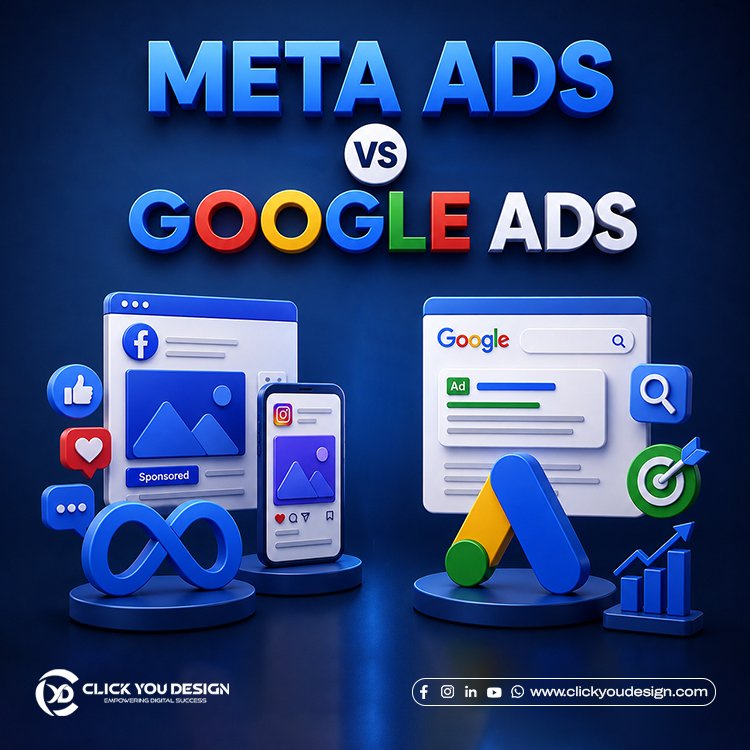
Meta Ads vs Google Ads is one of the most common comparisons businesses make when planning their digital marketing strategy. Both platforms help brands reach potential customers, increase website traffic, and generate leads. However, they work in different ways and serve different marketing goals.
If you want to invest your advertising budget wisely, understanding the strengths of each platform is essential. This guide explains the differences between Meta Ads vs Google Ads, compares their features, and helps you decide which platform suits your business.
Understanding Meta Ads
Meta Ads are paid advertisements that appear across Facebook, Instagram, Messenger, and the Meta Audience Network. Instead of waiting for users to search for a product or service, Meta introduces your business to people based on their interests, online behavior, demographics, and interactions.
This approach makes Meta an excellent platform for building brand awareness and encouraging customer engagement.
Some popular Meta ad formats include:
- Image Ads
- Video Ads
- Carousel Ads
- Collection Ads
- Stories Ads
- Reels Ads
- Lead Generation Ads
Businesses that sell visually appealing products or want to grow their social media presence often achieve excellent results with Meta advertising.
Understanding Google Ads
Google Ads is Google’s online advertising platform that displays ads across Google Search, YouTube, Gmail, Google Maps, and millions of partner websites.
Unlike Meta, Google primarily targets people who are actively searching for products or services. As a result, businesses can connect with customers who already have purchase intent.
Google Ads offers several campaign types, including:
- Search Ads
- Display Ads
- Shopping Ads
- Performance Max Campaigns
- Video Ads on YouTube
- App Promotion Campaigns
- Local Campaigns
Businesses looking for immediate inquiries, website traffic, and qualified leads often benefit from Google Ads.
Meta Ads vs Google Ads: Key Differences
Feature |
Meta Ads |
Google Ads |
|
User Intent |
Targets people based on interests |
Targets people searching for specific keywords |
|
Platforms |
Facebook, Instagram, Messenger |
Google Search, YouTube, Gmail, Maps, Display Network |
|
Best For |
Brand awareness and engagement |
Lead generation and conversions |
|
Audience Targeting |
Interests, behaviors, demographics |
Keywords, search intent, location, audience signals |
|
Ad Formats |
Images, videos, carousels, reels |
Search, display, shopping, video |
|
Buying Stage |
Discovery |
Decision-making |
|
Visual Content |
Strong emphasis |
Moderate emphasis |
|
Conversion Speed |
Usually longer customer journey |
Often faster conversion for high-intent searches |
Audience Targeting
One of the biggest differences between these advertising platforms is how they find potential customers.
1. Meta Ads
Meta focuses on audience behavior. It analyzes users’ interests, hobbies, purchasing habits, and online activity to deliver relevant advertisements.
For example, someone interested in home interiors, architecture, and furniture may start seeing advertisements for interior design companies even without searching for them.
2. Google Ads
Google relies on search intent. When someone searches for phrases like:
- Best dentist near me
- Digital marketing agency
- Buy running shoes online
Google displays ads that closely match those search queries.
Because users are already looking for a solution, Google Ads often produce high-quality leads.
Cost Comparison
Advertising costs depend on several factors, including industry competition, audience size, campaign quality, and bidding strategy.
Generally:
1. Meta Ads
- Lower cost per click in many industries
- Excellent reach for awareness campaigns
- Affordable for small businesses
2. Google Ads
- Higher cost per click for competitive keywords
- Better conversion potential
- Strong return on investment when campaigns are well optimized
Instead of focusing only on advertising costs, businesses should evaluate the overall return generated from each campaign.
Which Platform Delivers Better Leads?
The answer depends on your business objectives.
Google Ads often delivers highly qualified leads because users actively search for products or services.
Meta Ads creates demand by introducing your brand to people who may not have considered your business before. Although the buying process may take longer, Meta plays a major role in influencing purchasing decisions.
Many successful companies use both platforms together to guide customers throughout the buying journey.
1. Brand Awareness
If your goal is to introduce a new product, promote a new service, or increase brand visibility, Meta Ads usually performs better.
Instagram Reels, Facebook Stories, and engaging video advertisements allow businesses to capture attention quickly.
Visual storytelling also helps brands build stronger emotional connections with potential customers.
2. Lead Generation
Businesses looking for immediate inquiries often choose Google Ads because users already have buying intent.
However, Meta Lead Ads also simplify the enquiry process by allowing users to submit their contact information without leaving Facebook or Instagram.
Both platforms support lead generation, but each serves a different stage of the customer journey.
3. When Should You Choose Meta Ads?
Meta advertising works well if you want to:
- Increase brand awareness
- Grow your social media audience
- Promote visually attractive products
- Build customer engagement
- Reach new audiences based on interests
4. When Should You Choose Google Ads?
Google advertising is ideal if you want to:
- Generate qualified leads
- Increase website traffic
- Capture customers ready to buy
- Promote local services
- Improve sales from search traffic
Why Many Businesses Use Both Platforms
Rather than choosing one platform over the other, many businesses combine both for better results.
For example:
A customer first discovers your business through an engaging Instagram Reel. Later, they search your company on Google before making a purchase. Because your Google Search Ad appears at the top of the results, they click, visit your website, and complete the purchase.
This combination creates multiple touchpoints that improve trust and increase conversion rates.
Final Thoughts
Choosing between Meta Ads vs Google Ads depends on your business goals, target audience, budget, and marketing strategy. Meta excels at creating awareness and engaging potential customers through visually compelling content. Google, on the other hand, reaches people who are actively searching for solutions, making it highly effective for generating leads and driving conversions.
Instead of viewing these platforms as competitors, consider how they can work together. A balanced advertising strategy that combines social media advertising with search engine marketing often delivers stronger results than relying on a single channel.
Our digital marketing experts create data-driven Meta Ads vs Google Ads campaigns that maximize your return on investment and help your business reach the right audience at the right time.
Contact us today to build a results-driven advertising campaign that accelerates your business growth. Find the Best Advertising Platform for Your Business.